Rust 高级模式匹配:match 守卫、@ 绑定与切片模式
match源自函数式编程语言(如 ML、Haskell),它是一种比 Cswitch或 Javaaswitch强大得多的结构。switch只能对简单的值(如整数、枚举)进行比较,而match可以***(Destructure)复杂的数据类型(structenumtuple),并同时绑定(Bind)变量。// C 语言 switch (不灵活)// Rust match (强大)Quit,("Qui
目录
2.3 @ 绑定 (Sub-pattern Bindings)
📝 文章摘要
match 表达式是 Rust 控制流(Control Flow)的基石,它强制开发者“穷尽性检查”(Exhaustiveness Checking),确保所有可能的情况都得到处理。本文将超越简单的 match,深入探讨高级模式匹配(Pattern Matching)技术:包括 match 守卫(Guards)、@ 绑定(@ Bindings)、切片(Slice)模式、以及 ref 和 mut 在模式中的绑定语义,展示 match 如何在保证安全性的同时提供强大的解构(Destructuring)能力。
一、背景介绍
match 源自函数式编程语言(如 ML、Haskell),它是一种比 C switch 或 Javaa switch 强大得多的结构。switch 只能对简单的值(如整数、枚举)进行比较,而 match 可以***(Destructure)复杂的数据类型(struct, enum, tuple),并同时绑定(Bind)变量。
// C 语言 switch (不灵活)
// switch (x) { case 0: ...; case 1: ...; }

// Rust match (强大)
enum Message {
    Quit,
    Move { x: i32, y: i32 },
    Write(String),
}
fn handle_message(msg: Message) {
    match msg {
        Message::Quit => println!("Quit"),
        Message::Move { x, y } => println!("Move to ({}, {})", x, y), // 解构
        Message::Write(text) => println!("Text: {}", text), // 绑定
    }
}
本文将探讨 match 臂(arm)中更精妙的语法。
二、原理详解
2.1 匹配的 6 种模式
Rust 的模式(Pattern)是其语法的核心部分,它们可以用在 match, if let, while let 和 let 语句中。
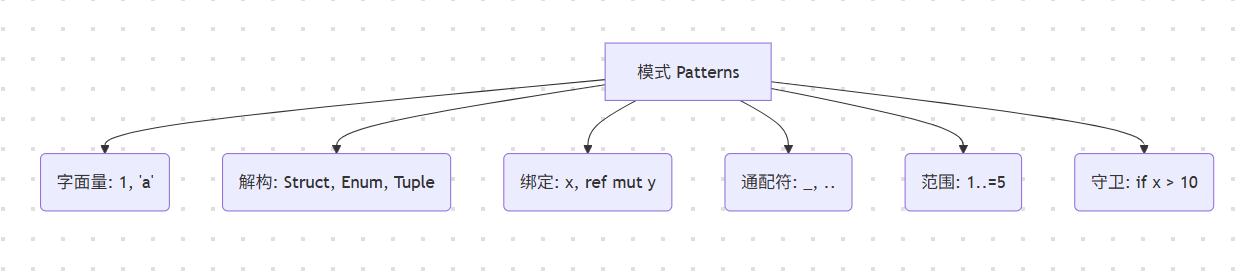
2.2 `match 守卫 (Match Guards)
match 守卫允许在 match 臂上添加一个额外的 if 条件。
fn main() {
    let num = Some(4);

    match num {
        Some(x) if x < 5 => println!("x is < 5: {}", x),
        Some(x) => println!("x is >= 5: {}", x),
        None => (),
    }
    // 输出: "x is < 5: 4"
}
守卫 vs 模式内 if:if 守卫(Guard)不会“消耗”或“移动”变量,它只是在 match 臂被选中之前进行检查。
let opt: Option<String> = Some("hello".to_string());

match opt {
    // ❌ 编译错误:`s` 在 `if` 中被 moved
    // Some(s) if s.len() > 0 => {}

    // ✓ 正确:Match 守卫
    // `s` 仍然被 `match` 臂拥有,`if` 只是借用了它
    Some(s) if s.len() > 0 => println!("Got s: {}", s),
    _ => (),
}
2.3 @ 绑定 (Sub-pattern Bindings)
@ 符号允许我们在解构一个复杂类型的同时,给这个被解构的值(或其子部分)一个名字。
场景:检查一个 struct 的字段,但如果匹配,则返回整个 struct。
struct Point { x: i32, y: i32 }

fn match_point(p: Point) {
    match p {
        // 匹配 x=0, y=...,并把整个 Point 绑定到 `p_on_y_axis`
        p_on_y_axis @ Point { x: 0, .. } => {
            println!("On Y axis: {:?}", p_on_y_axis);
        }
        // 匹配 x=..., y=0
        Point { x: _, y: 0 } => println!("On X axis"),
        // 匹配其他
        Point { x, y } => println!("At ({}, {})", x, y),
    }
}
@ 与 match 守卫结合:
enum Message {
    Hello { id: i32 },
}

let msg = Message::Hello { id: 10 };

match msg {
    // 匹配 id,绑定到 id_val,并且 id_val 在 3..=7 范围
    Message::Hello { id: id_val @ (3..=7) } => {
        println!("Found ID in range: {}", id_val);
    }
    // 匹配 id,绑定到 id_val,并且 (if 守卫) id_val > 10
    Message::Hello { id } if id > 10 => {
        println!("Found ID > 10: {}", id);
    }
    Message::Hello { id } => {
        println!("Found other ID: {}", id);
    }
}
2.4 ref 和 mut 绑定模式
match 默认会移动(Move)所有权(如果可能)。ref 和 mut 关键字允许我们在 match 内部强制创建借用(Reference)。
let robot_name = Some("Bender".to_string());

match robot_name {
    // `Some(name)` 会尝试 move `String`
    // Some(name) => println!("{}", name),
    // ❌ 错误:`robot_name` 之后被 move

    // `Some(ref name)` 强制借用 `&String`
    Some(ref name) => println!("Ref: {}", name),
    None => (),
}
println!("Name still valid: {:?}", robot_name); // ✓ OK

// -------------------
let mut count = 0;
match count {
    // `mut val` 绑定了一个可变的 *副本* (i32 is Copy)
    mut val => val += 1,
}
println!("{}", count); // 0 (count 本身未变)

match &mut count {
    // `val` 的类型是 &mut i32
    val => *val += 1,
}
println!("{}", count); // 1 (count 本身被修改)
**match 人程学 (Match Ergonomics, NLL)**:
在 Rust 2018 之后,ref 变得不那么必要了。如果你 match &Option<String>,编译器会自动匹配 Some(name),其中 name 的类型是 &String(自动推导借用)。
三、代码实战
3.1 实战:解构 struct 和 enum
struct User {
    id: u32,
    active: bool,
    location: (f32, f32),
}

enum AccessLevel {
    Guest,
    User(User), // 关联数据
    Admin { id: String },
}

fn process_access(access: AccessLevel) {
    match access {
        // 1. 简单匹配
        AccessLevel::Guest => println!("Welcome, Guest!"),

        // 2. 匹配守卫 (Guard)
        AccessLevel::User(user) if !user.active => {
            println!("User {} is inactive", user.id);
        }

        // 3. 解构 + @ 绑定 + 守卫
        // "匹配一个 User,将其绑定到 `u`,
        //  解构其 `id` 并绑定到 `id`,
        //  并且 `id` 必须是 101"
        AccessLevel::User(u @ User { id: 101, .. }) => {
            println!("Welcome, VIP User 101! Location: {:?}", u.location);
        }

        // 4. 解构 (只关心 location)
        AccessLevel::User(User { location: (x, y), .. }) => {
            println!("Standard user at ({}, {})", x, y);
        }

        // 5. 解构 Admin (只关心 id)
        AccessLevel::Admin { id } => {
            println!("Welcome, Admin {}!", id);
        }
    }
}

fn main() {
    process_access(AccessLevel::Guest);
    process_access(AccessLevel::User(User { id: 50, active: false, location: (0.0, 0.0) }));
    process_access(AccessLevel::User(User { id: 101, active: true, location: (1.1, 2.2) }));
    process_access(AccessLevel::Admin { id: "root".to_string() });
}
3.2 实战:切片模式 (Slice Patterns)
match 还可以解构数组(Array)和切片(Slice)。
fn match_slice(slice: &[i32]) {
    match slice {
        // 1. 精确匹配
        [1, 2] => println!("Slice is [1, 2]"),

        // 2. 绑定第一个元素,`..` 忽略剩余
        [first, ..] => println!("First element is: {}", first),

        // 3. 匹配空切片
        [] => println!("Slice is empty"),

        // 4. 匹配开头和结尾
        [1, middle @ .., 5] => {
            println!("Starts with 1, ends with 5. Middle: {:?}", middle);
        }

        // 5. 默认 (通配符)
        _ => println!("Some other slice..."),
    }
}

fn main() {
    match_slice(&[1, 2]); // "Slice is [1, 2]"
    match_slice(&[1, 2, 3, 4, 5]); // "Starts with 1, ends with 5. Middle: [2, 3, 4]"
    match_slice(&[5, 6, 7]); // "First element is: 5"
    match_slice(&[]); // "Slice is empty"
}
四、结果分析
4.1 穷尽性检查 (Exhaustiveness)
match 最重要的特性是穷尽性(Exhaustiveness)。Rust 编译器会(在编译时)检查你是否覆盖了所有可能的情况。
enum MyBool { True, False }

fn check_bool(b: MyBool) {
    match b {
        MyBool::True => println!("True"),
    }
    // ❌ 编译错误:
    // non-exhaustive patterns: `MyBool::False` not covered
}
分析:
这与 if let 形成了鲜明对比。if let 适用于你只关心一种情况的场景,而 match 强制你处理所有情况(或使用 _ 显式忽略)。match 守卫不影响穷尽性检查。
五、总结与讨论
5.1 核心要点
- 解构(Destructuring):
match可以“拆开”struct、enum和tuple。
-----穷尽性(Exhaustiveness)**:match 必须覆盖所有可能的情况,否则无法编译(_ 通配符用于“其他”)。
match守卫(Guards):使用if condition为match臂添加额外的运行时逻辑。@绑定:使用variable @ pattern在匹配子模式的同时,捕获整个模式的值。- 切片模式:使用
[a, b, ..]或[first, rest @ ..]来匹配数组和切片。
绑定模式:ref 和 mut 关键字(在 NLL 之前很重要)用于在 match 中控制所有权(移动 vs 借用)。
5.2 讨论问题
if let链(`if let Some(a) = foo&& let Ok(b) = bar)在 Rust 1.76+ 中稳定了。它在何种程度上可以替代嵌套的 \match?match守卫(if x > 10)和match臂内的if语句({ if x > 10 { ... } })在所有权和执行逻辑上有何区别?if let是match的语法糖吗?while let呢?
参考链接

开放原子旋武开源社区由开放原子开源基金会孵化及运营,业务方向涉及操作系统、终端设备、安全技术、基础软件等关键领域,致力于推动Rust编程语言在中国的开源生态建设与产业落地,面向开发者全面宣传和推广Rust。
更多推荐


 4
4 0
0- 0


 已为社区贡献1条内容

所有评论(0)